54% of EU’s electricity came from renewables in Q2 2026
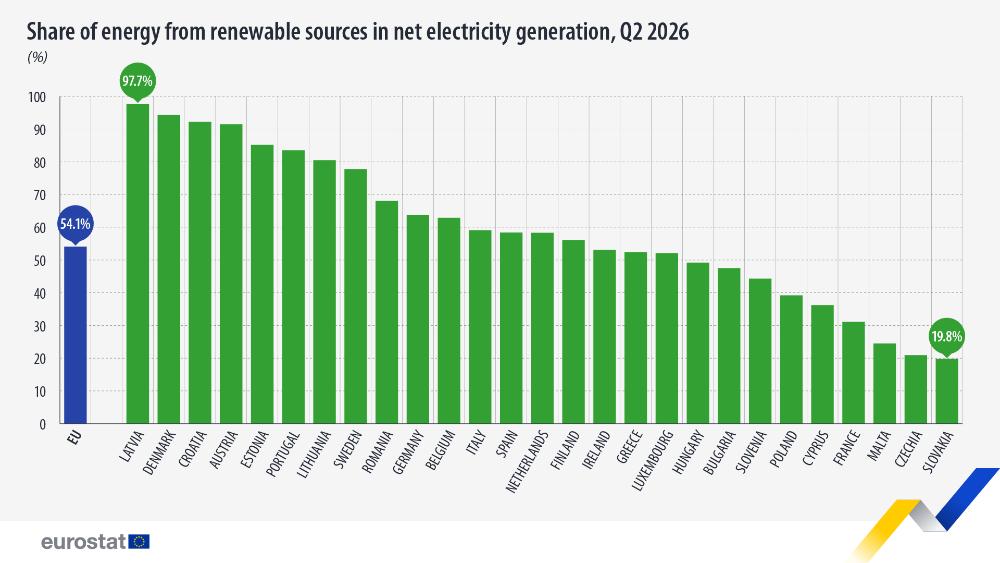
In the second quarter of 2026, 54.1% of the electricity generated in the EU came from renewable energy sources, a slight decrease from 54.3% in the same period of 2025.
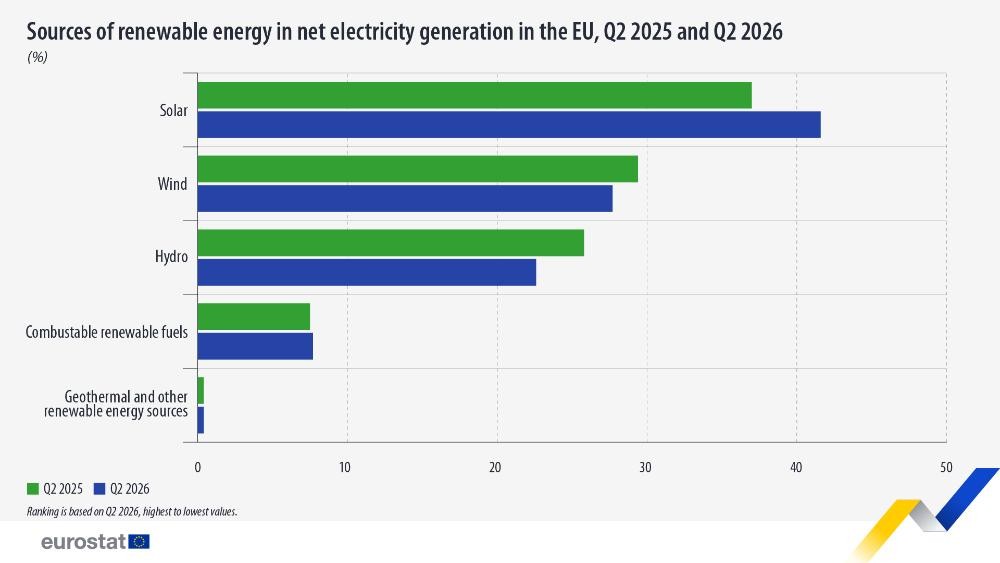
Solar was the leading source of renewable electricity in the EU (41.6% of the total renewable electricity), increasing its share from 37.0% in the second quarter of 2025. Wind was the second-largest source with 27.7%, followed by hydro power with 22.6%. The remaining renewable electricity came from combustible renewable fuels (7.7%) and geothermal and other energy sources (0.4%).
Source dataset: nrg_cb_pem
From 19.8% in Slovakia to 97.7% in Latvia
EU countries with the highest shares of electricity produced from renewable sources in the second quarter of 2026 were Latvia (97.7%, mostly hydro and solar), Denmark (94.3%, mostly wind) and Croatia (92.2%, mostly hydro).
In contrast, the lowest shares were recorded in Slovakia (19.8%), Czechia (20.9%) and Malta (24.5%).
Source dataset: nrg_cb_pem
For more information
- Statistics Explained article on renewable energy
- Thematic section on energy
- Database on energy
- Interactive energy visualisations
- Energy in Europe – 2026 edition
Methodological notes
- The share of renewables in net electricity production should not be mistaken for the share of renewables in gross electricity consumption, which is the main indicator used to monitor the Renewable Energy Directive (RED). The methodologies used to calculate each of them differ. The former (used in this article) is only based on electricity generation, while the latter follows the methodology of the RED and divides electricity generation by electricity consumption, which can lead to shares higher than 100%. In addition, the share according to the RED requires that hydro and wind power are averaged over several years to smooth out the effects of meteorological variation (‘normalised’), and considers electricity from renewable combustible fuels (solid, liquid and gaseous biofuels) as renewable only when these biofuels comply with the sustainability criteria. More details on these differences can be found in the Energy balance guide and in the SHARES Manual.
- Hydro power excludes pure pumping in the numerator and the denominator.
- Solar includes solar photovoltaics and solar thermal electricity generation.
For information on upcoming releases, visit our release calendar. If you have any queries, please visit our contact us page.
Další články
Česko se od října vrací k regulaci cen pohonných hmot. Podobný zásah chystá…
Vláda obnovuje regulaci cen PHM a snižuje spotřební daň z nafty na evropské…
Německý VW výrazně snížil očekávání pro výhled provozního zisku
Pro a proti: Zkrotí vláda ceny benzinu? Teď je to jiné než na jaře, zní z ANO.
38. týden na trhu pohonných hmot ČMKB - nafta v průměru za 28,86 Kč/litr

Šestnáct nehod za 48 hodin. Takový byl třetí zářijový víkend pro hasiče v…
Více článků »